
Menopause support, grounded in current clinical research from Chemist2U
Plain-English articles on perimenopause, menopause and post-menopause. All content is reviewed by Dr Matt Cullen MBBS, FRANZCP.

Start with the basics

How long does menopause last? Timeline and stages guide
A clear timeline of perimenopause, menopause and post-menopause, with what tends to shift at each stage.

How to identify the early signs of menopause
The common early signs, why they can be easy to miss, and when tracking them starts to help.

Common menopause symptoms and management
The symptoms most women report, how they tend to shift over time, and the options available for day-to-day management.

Menopause Australia: symptoms, stages and support
A plain-English guide to the stages of menopause, common symptoms, and where to find support in Australia.

When does menopause start? Average age and early signs
The average age range for menopause onset, what counts as early, and the signs that often appear first.

What is post-menopause? Symptoms, risks and what to expect
Post-menopause begins 12 months after your last period. What changes, what symptoms may continue, and what is worth discussing with your GP.

Perimenopause symptoms: what to expect in your 40s
Perimenopause symptoms can start years before your last period. What is normal, what is worth checking, and how to prepare for a useful GP visit.

Perimenopause weight gain: why it happens and what helps
Many women notice weight gain in perimenopause, even when nothing else changes. What is going on hormonally, and what actually helps.

Menopause weight gain and belly fat: what is happening
Why weight tends to settle around the middle in menopause, what the research says about it, and the evidence-based steps that actually move the needle.

Eating well through menopause: a practical guide
A practical, evidence-based guide to eating well in perimenopause and menopause. Protein, calcium, fibre, alcohol and the patterns that actually help.
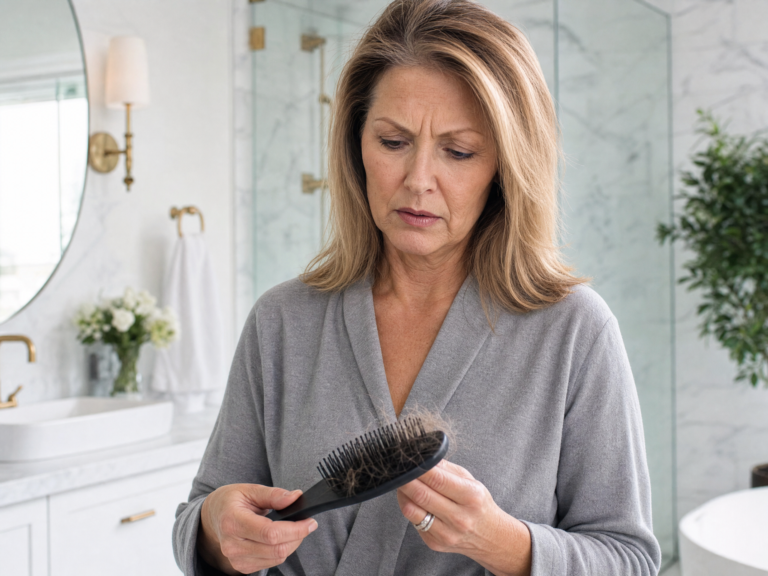
Menopause and hair loss: what is happening and what helps
Hair thinning and shedding are common in menopause. What is going on biologically, what helps, and when it is worth seeing your GP.
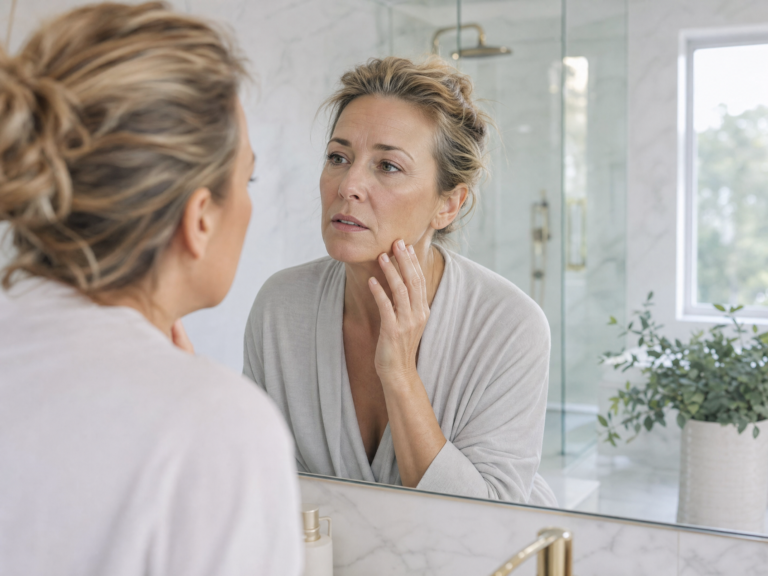
Menopause and skin changes: what is happening and what helps
Skin dryness, sensitivity, collagen loss and breakouts are common in menopause. The biology, and the evidence-based steps that genuinely help.

Menopause brain fog: what is happening and what helps
Brain fog is one of the most common menopause symptoms women report. What the research says, what helps, and when to see your GP.

Post-menopause bleeding: when to see your GP
Any vaginal bleeding after menopause needs to be checked by a doctor. What postmenopausal bleeding can mean, what your GP will do, and why it matters.

Early and premature menopause: what it means and next steps
Early menopause is before 45; premature menopause is before 40. What it can mean for your health, and the next steps to take with your GP.
How Chemist2U supports menopause
Evidence-based information
Guidance grounded in current clinical research and Australian practice, written to be easy to read and easy to act on.
Medication delivered to your door
Pharmacist-supported, with same-day delivery in capital cities and major urban areas and Express Post everywhere else.
Dr Matt Cullen medical oversight
Clinical content is reviewed by Dr Matt Cullen MBBS, FRANZCP, Chief Medical Officer at Chemist2U.
Common questions about menopause
This content is general information only and is not medical advice. If you have symptoms or concerns, speak with a qualified health professional.
If you mean the full transition, most of the "length" is perimenopause, which commonly lasts 4 to 10 years. Menopause is the single point you confirm after 12 months with no period, and post-menopause comes after that.
If you're still having periods (even irregularly), you're likely in perimenopause rather than "menopause" itself. This stage can last years and symptoms can come and go. Tracking your cycle and symptoms can help you see patterns and decide when to seek support.
Some symptoms ease within a few years of the final period, while others can last longer or fluctuate. If symptoms are affecting your quality of life, it's reasonable to seek help. There are evidence-based options that can reduce severity and improve sleep, mood, and daily functioning.
Post-menopause starts after you've reached the 12-month no-period milestone. Your hormones stabilise at a new baseline, and symptoms may ease, but some symptoms (especially vaginal and urinary symptoms) may need targeted support.
Perimenopause is the transition stage leading up to your final period, where hormone levels begin to fluctuate and symptoms often start. Menopause itself is confirmed after 12 months without a period. Perimenopause can last several years; menopause is a single point in time.
Commonly reported symptoms include hot flushes, night sweats, sleep disturbance, mood changes, changes in energy or concentration, and vaginal or urinary changes. The mix and severity varies from person to person, and tracking your symptoms can help you and your clinician choose the right support.
If symptoms are affecting your sleep, mood, work or daily functioning, it's reasonable to speak with your GP or another qualified clinician. You don't need to wait until symptoms are severe. Evidence-based options exist and the right support is highly individual.
Explore other programs and topics
Keep exploring menopause
Browse our menopause articles, or head back to the Learn hub to see all programs and topics.